






Hello, we use cookies on our website to find out how many people visit the website and what services they are interested in. We can only use these files with your consent.
What is Merino wool and how is it made?
10. 07. 2022, 19:40
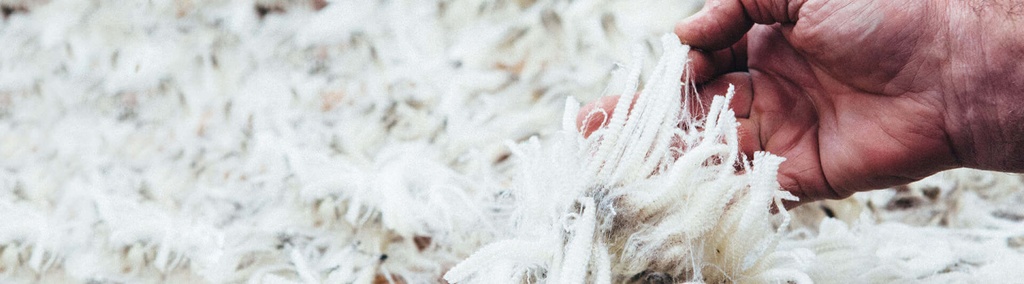
Merino wool is the finest and softest wool in the world. Its natural benefits are so great that no other fiber – natural or man-made – can match it.
Fashion designers love this unique fiber for its quality and versatility – nothing else looks like Merino wool, which has incredible properties.
How is merino wool produced?
Wool farmers produce the world's highest quality wool from Merino sheep using sustainable farming practices. Unlike synthetic materials, which are industrially produced using non-renewable fossil energy, merino wool is a natural fiber grown year-round by Merino sheep, which consume a simple mix of natural ingredients including sunlight, water, fresh air and grass. Each year, these sheep produce a new fleece, making wool a completely renewable fiber.
Probably the oldest known animal fiber, wool is composed of a natural protein called keratin—the same protein found in human hair—with small amounts of calcium, sodium, and fat. The surface of each fiber is covered with scales, which are important in the production of felt and traditional woolen fabrics.
Production and processing of sheep wool
Different types of wool
Not all wool is created equal. Some wools are softer than cashmere, while others are harder and more durable, making them suitable for carpets and bedding. Wool can be divided into three main categories based on the micron (diameter) of each fiber. One micron is equal to one millionth of a meter, and the length of the fiber is recorded in millimeters – these are the main measurements that determine the quality and uses of wool. The average micron of a human hair is between 50 and 100 microns. Merino wool is generally less than 22 microns, which shows how soft this fiber is.
Fine: The finest micron wool comes from Merino sheep and is used for high-quality fabrics and soft-handling knitting yarns. Fine wool is highly prized by the world's leading fashion houses and is a key ingredient in many Woolmark collaborations.
Medium: Medium micron wool can be made from the Merino breed or produced by crossing one breed with another. Medium wools are used in a variety of woven clothing fabrics and home furnishings.
Broad: Many different breeds of sheep produce broader wool. These breeds are often known as dual-purpose because they are raised with equal emphasis on meat and wool. Broad wool is useful for products such as carpets because of its strength and durability.
Comparison of common clothing fibers
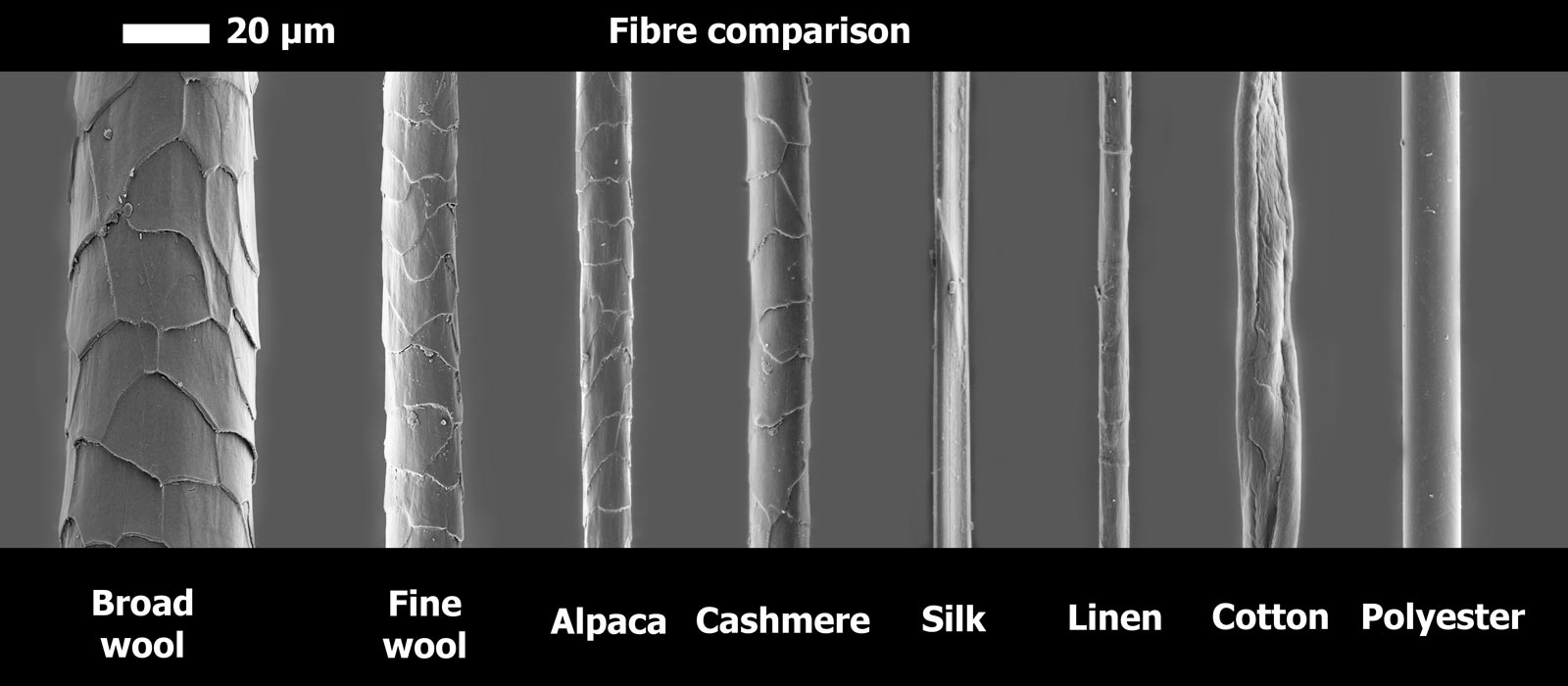
Wool – along with alpaca and cashmere – has a unique scale structure with different patterns depending on the animal it comes from. These scales are important for protection, felting behavior, and handling in finished products such as clothing. They also provide a natural water-resistant surface.
Cellulosic fibers – cotton, silk, and linen – and synthetic fibers like polyester do not have these unique scales.
Natural versus synthetic fibers
Natural fibers are produced by animals (wool) and plants (cotton) as fibrous materials that can be spun into yarn. The properties of natural fibers are that:
- Serves a purpose in nature.
- It is produced by a living organism.
- It grows spontaneously, without the need for human intervention.
Synthetic fibers are made from fossil fuels/petroleum oils.
Comments
Discussion is empty.