






Hello, we use cookies on our website to find out how many people visit the website and what services they are interested in. We can only use these files with your consent.

Spring: do you know the traditions and rituals associated with the most beautiful season?
20. 03. 2025, 00:00
After winter, spring is slowly making its presence felt. Do you also love this time of year, when the grass turns green, we put away our scarves and hats, and breathe in the air that starts to smell so beautiful? Let's take a look together at what traditions and rituals are typical for this time of year.
Easter
The most important (not only spring) holiday is undoubtedly Easter . The so-called Ash Wednesday is also related to them. Ash Wednesday begins the forty-day period of fasting. We should take care of the spirit, not just the body. On this day, the priest makes a cross on the forehead of the faithful from the ashes of the kittens consecrated on the previous Palm Sunday. As proof of the transience of human life. Several superstitions are also associated with this day, for example, it is said that the weather on Ash Wednesday will be the same throughout the year. On this day, feathers were also not allowed.
The first Sunday of Lent after Ash Wednesday is called Black , after the clothing people wore on that day.
The second Sunday of Lent is Pražná . On this day, grain was roasted, from which the dish bream was made.
The third Sunday is Sneezing Sunday . On this day, people wished for good health. They believed that sneezing could start a plague epidemic.
The fourth Sunday of Lent is called Družební . On this day, the groom and his best man went to the house where they wanted to come for courtship on the wedding day.
On Death Sunday, the Grim Reaper or Moréna is brought out. Throwing a straw effigy dressed in old rags into a stream or river has survived to this day (especially in villages). This is an ancient pagan custom that symbolizes the end of winter and the welcoming of spring.
The sixth and last Sunday of Lent is Palm Sunday . On this day, the commemoration of Christ's entry into Jerusalem was celebrated. Pussy willows are blessed, which can then be eaten so that we are healthy all year long. Nothing should be baked on Palm Sunday, so as not to burn the flowers on the trees (no fruit would be produced). Previously, it was also observed that on this day people should wear something new. And last but not least, apartments or houses were also cleaned - thus the Easter cleaning began.
Palm Sunday is followed by Holy Week:
Blue Monday (sometimes called Yellow Monday) used to be a day off for Christians, when they were not supposed to work. But at home, housekeepers and householders would tidy up the entire building, clean, take over necessary and unnecessary things, repair them or throw them away.
Ash Tuesday is another day dedicated to a thorough cleaning of the household. And on Tuesday, cobwebs must be swept out of every corner, symbolically banishing all evil not only from the house or apartment, but also from our lives.
Ugly Wednesday commemorates Judas' betrayal, i.e. an ugly deed. It is also called Sazometná or Smetná or Černá because on the Wednesday before Easter, soot was swept out of the chimney after the winter. We should finish our spring cleaning at home so that our household is like a cage. And most importantly, we should have a smile on our lips and a good mood all day long and in no case frown! According to one of the folk superstitions, our frowned face would remain on us all year long, at the very least we would look ugly every Wednesday of the year. And we don't want that!
On Maundy Thursday, the bells fly to Rome. Until Saturday evening, when the bells return, they are replaced by rattles and clappers. And that is quite a commotion and fun for the children. At noon and in the evening (sometimes even at noon), the children used to walk through the village with these noise-making instruments and sing: "We are chasing Judas and we are ringing him with wood. Whoever saw him, let him tell us about the unfaithful Judas. O unfaithful Judas, what did you do that you betrayed the Lord Christ to the Jews? For that you must burn in hell, with the devil, the devil. When we catch Judas, we will throw him into the fire!" And when they finished their tour, they shouted: "Cruciferum ďáblum" as a sign that Judas was already being roasted in hell.
On Good Friday , Jesus was crucified. This day has a lot of mystery and magic in it. We are not allowed to touch meat, wash clothes, or move the soil in any way, so we must give up any gardening.
And what should we do instead: early in the morning, before dawn, in our own interest, we run to the nearest stream or river (it must be running water, so perhaps even tap water will suffice) and wash ourselves, because that's the only way we have a chance of staying healthy all year long. And the water from the springs is said to turn into wine in the morning, which might be worth trying...
On Good Friday, the treasures in the rocks and cellars also open for a few hours. However, if we are so enchanted by the gold and precious stones that we forget the time, the rock will close and we will remain trapped there for a year. So be careful!
Another superstition claims that on Good Friday we will find something precious to us that we lost or misplaced in the previous year.
Holy Saturday is first celebrated as a sign of mourning at the tomb of Jesus. It was customary to bless fires in front of the church doors, and everyone could then take home a blessed log or hot coals. In the evening, bells from Rome return to celebrate the resurrection of Jesus Christ. On Easter Sunday, Jesus' resurrection was celebrated. The Lenten period ends, and Easter dishes are blessed in the church - lamb, cakes, eggs, wine...
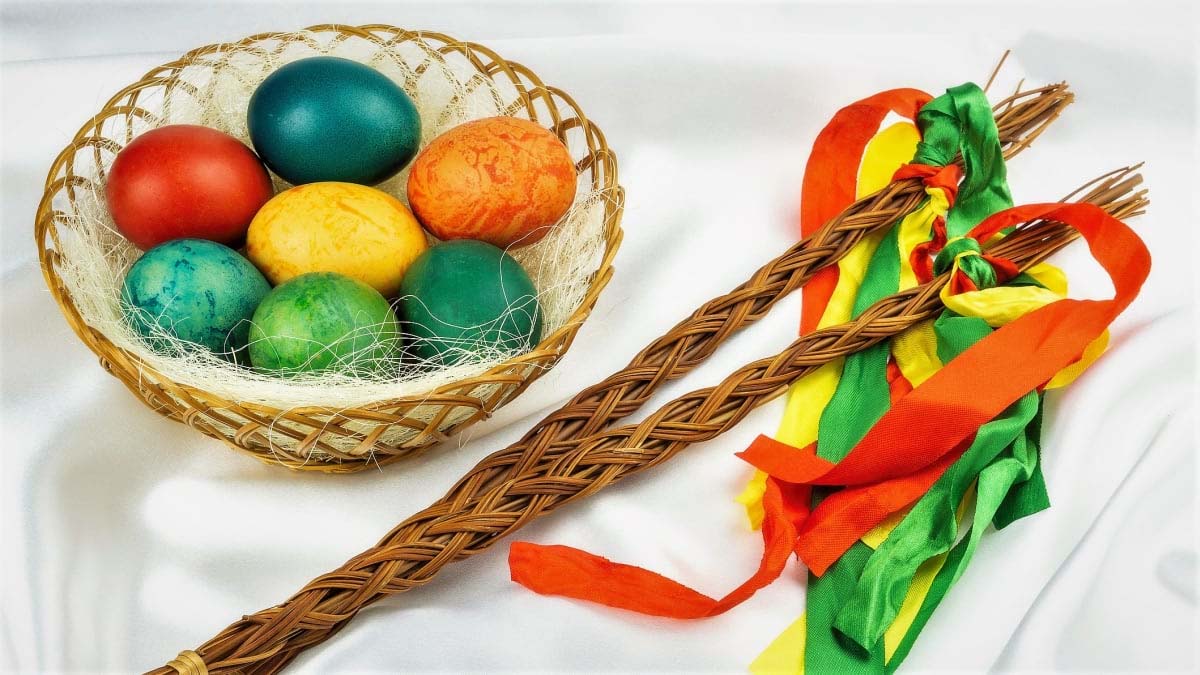
On Holy Saturday, people used to whitewash and clean the cottage to make it look like a cage. Festive dishes were prepared, sweetbreads and lambs were baked, pomlázky were knitted, and Easter eggs were decorated.
Easter or Red Monday is a day of caroling. Easter ends with the old pagan custom of whipping with pomláža, which has survived to the present day. A woman or girl is to be gently whipped with fresh, unpeeled, leafless willow twigs. It is supposed to ensure fertility and energy for married women, freshness, beauty and health for seductive girls. Women and girls are rewarded with Easter eggs for the rejuvenating whipping with pomláža. Part of the caroling can include pouring water; in some places, young men pour water on women, in others, women on men.
March cleaning tips:
A stork flies from the sea to St. Gregory.
On Saint Gregory's Day, every lazy farmer who doesn't plow.
If there is a lot of rain in March, it will cause a poor harvest.
March - I'm climbing behind the stove.
April (April 1)
April Fool's Day is an integral part of April 1st. Since the 16th century, April Fool's Day has been associated with various pranks and petty mischief. It is not an original Czech holiday, it came to the Czech Republic from France and quickly became a household name. It is believed that the holiday originated as a reaction to the change of season from the sad winter to the more cheerful spring.
Witch Burning (April 30)
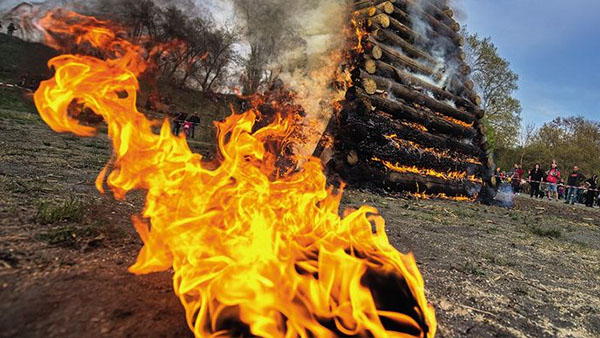
April 30th has long been a day for witch burning . St. Philip's Night is dedicated to the burning of bonfires, which, according to legend, are supposed to drive away witches from the area.
The form of witch burning at the beginning of the 21st century retains many features from the past, but at the same time there have been a number of changes. The function is primarily different, the original social, protective and religious meaning has been replaced by an entertaining and social function. Witch burning takes place both within the family, neighbors or friends, and as an organized event. Especially urban and organized events sometimes have the character of a kind of "witch carnival". There are also commercial events tied to this custom, such as Čarodějáles.
April cleaning tips:
Snakes and scorpions are climbing on St. George.
In April, it's warm on top, freezing on the bottom.
April will show what the roast will be like.
April abundant in water - October abundant in wine.
May Day (1 May)
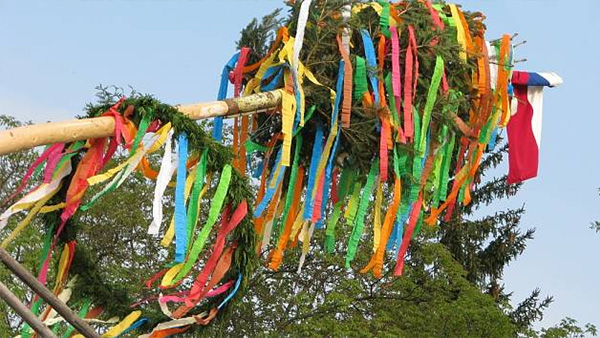
May Day , the time of love. On the eve of May 1, young men go to the forest to cut down a young birch tree, decorate it with colorful ribbons, and place it in front of the house where their sweetheart lives. Although this tradition is mainly observed in villages, in recent years May Day festivities have also returned to cities. On this day, a girl should be kissed under a cherry blossom tree so that it does not wither.
Mother's Day
Celebrated on the second Sunday in May in the Czech Republic, Mother's Day is a day to honor mothers and motherhood.

Ascension
On the fortieth day after Easter, Christians celebrate the Ascension , which commemorates Jesus' ascension from earth to heaven. It was the last meeting of the resurrected Christ with his disciples. He told them that he would no longer be visible and departed, ascending to heaven.
Whitsuntide
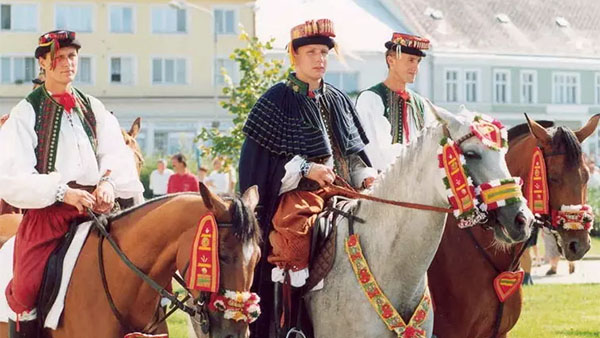
Pentecost , also known as Pentecost, the Descent of the Holy Spirit, Whitsunday, or Whitsundays, is a Christian holiday celebrated 50 days after Easter. It is the feast of the Descent of the Holy Spirit and the fulfillment of Easter. During the Pentecost period, the Three Kings' Day processions were held, and in many places still are. Girls and women would open wells.
May cleaning tips:
Icemen freeze fruit.
A wedding in May calls for a funeral.
On the occasion of the Holy Spirit, still walk in fur.
If there is a lot of thunder in May, it is usually a fertile year.
Comments
Discussion is empty.