





Hello, we use cookies on our website to find out how many people visit the website and what services they are interested in. We can only use these files with your consent.
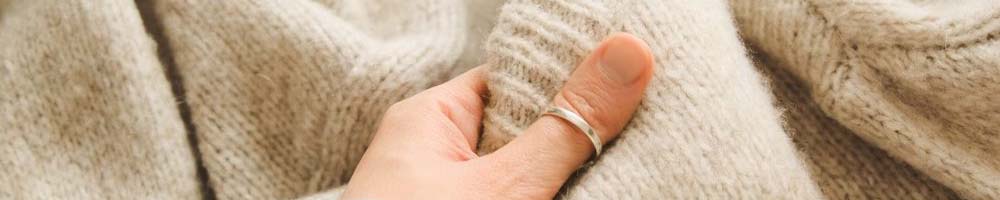
Why are there piles on merino wool?
29. 08. 2024, 07:17
Merino wool is simply amazing - soft, warm and able to adapt to temperature. But as is often the case, sometimes small "balls" or lumps can appear on our favorite merino pieces. Although this may seem like a defect at first glance, it is actually a completely normal and natural phenomenon.
The Merino sheep from which this magical wool is obtained have fibers so fine that they are almost absorbed by their own softness. And it is this fineness that is responsible for those little balls that can form on the surface of our favorite merino pieces. But don't worry, pilling is not a problem!
Unlike some synthetic materials, where pilling can be a result of normal wear and tear, with merino wool it is a natural process. In fact, it has no effect on how our clothing works - it still keeps us warm, cool and comfortable.
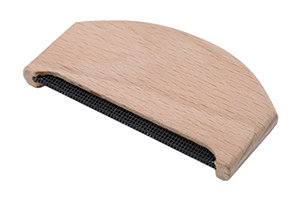
And best of all - pilling is easy to remove! Just use a soft brush or a special pilling comb and your merino pieces will look like new again.
How do clothes get pilled?
Pilling is not a sign of poor quality wool, but in fact, it is the opposite.
Pilling is a problem with many materials, especially natural ones. It most often affects fabrics and knitwear made of wool, viscose (especially bamboo), burette silk and cotton. However, it also affects artificial materials, typically polyester fiber.
Pills are essentially small knots and are the result of mechanical wear and tear on clothing and are not related to the quality of the material. As a rule, they form in places of abrasion, such as with belts in a car, under a handbag or backpack, on the hems of sleeves, where they rub against the hips when walking, in the armpits or on the shoulders, and in women in the breast area, where they rub against the top layer of clothing. In toddler clothing, they appear on the knees, stomach and elbows. In clothes for older children, pilling occurs in completely incomprehensible places, depending on the liveliness and enterprising nature of the child.
When wearing a garment, some of the thinner fibers and fine hairs are released from the yarn bundle, and through mechanical friction they become entangled with the fibers and fine hairs of the surrounding material, becoming tangled and forming a solid knot connected to the original structure of the textile. This is a completely natural process inherent in all natural materials, and in essence does not say anything about the quality of the affected piece of clothing (although it is sometimes mistakenly perceived as such, both by customers and manufacturers). With wool, it is exactly the opposite - the finer and fluffier the fiber, the more it will pill , because it contains a greater amount of thin hairs and the looser structure of the knit gives more opportunity to create an inseparable friendship with the surrounding fibers.
The most expensive types of wool are most prone to pilling - cashmere, angora, alpaca or merino. And of course, the finer the merino, the more pilling it produces.

How to minimize pilling
The formation of pilling on merino clothing can be partially prevented. Above all, it is important to remember to wash it properly.
Excessive pilling can be caused by poor maintenance, especially the use of fabric softener, detergent containing silicones and other softeners , as well as washing in harsh detergents , which dry out the fibers and increase their fraying. It is ideal to wash clothes inside out , as this does not increase mechanical stress on the outside and prevents pilling during washing.
Furthermore , drying in a dryer, as well as rough wringing, can contribute to the formation of pimples and unsightly knots. This can also shrink woolen clothes or cause them to become felted (usually, however, it causes both unwanted effects at once). And of course, some caution is in order during use - do not pull backpack straps or car seat belts directly over woolen clothes, or wear wool under rough and "hairy" jackets (typically, fleece lining can significantly worsen the condition of wool).
You should also be careful not to over-spin . Drying in a clothes dryer can also be problematic (although some appliances already have a special program for drying wool).
Unfortunately, pilling is an inherent part of this natural material. Therefore, consider gentle care, which can at least partially prevent their occurrence.
- Follow washing instructions carefully.
- When washing merino wool clothes, remember to turn them inside out before washing . When washing in the washing machine, use the wool program or wash your clothes by hand.
- Use wool detergents for woolen clothes. It is very good to use a detergent with lanolin , which coats the wool, smooths it and makes it less prone to pilling.
- Wash different colors of clothing separately. Pilling is more noticeable if you wash multiple colors together.
- Don't overload the washing machine! When you put all your merino pieces in the washing machine, you leave little room for the garment to move, which can encourage pilling.
- Consider whether your merino clothes need washing at all. Merino wool is naturally stain and body odor resistant, so why not try simply airing them out.
- If you wash merino, dry the garment flat either on a towel or on a clothesline.
- If you can, try to minimize friction and abrasion on your favorite merino.
How to remove lint from merino clothing
Are you getting irritated by lint, pimples or knots and you can't wait to reach for a lint remover ? There's nothing wrong with that. You just need to be very careful. Remember that lint removal doesn't stop the process and over time, the knots will reappear on your clothes.
By depilling, we remove part of the material , which of course reduces its density and weight. In the case of merino wool, this also partially reduces the thermal comfort that this material provides.
If you decide to do this process, there are several ways to do it: by hand, with a baby comb, a blunt razor blade or a hand-held electric device . In my opinion, the best solution is to remove the lint manually. We recommend using other alternatives such as a razor blade or an electric lint remover to a minimum. Even if you are very careful, you can damage the wool yarn and a small, inconspicuous hole is a big deal. However, we recommend not removing lint too often and proceeding in such a way that you do not damage other fibers and thus unintentionally encourage the formation of knots. You also need to be careful about the type of knitwear that you treat in this way. If we have, for example, a mixed material, it may happen that we gradually remove most of the wool fiber and only an admixture remains. This is not a problem with merino with silk, silk also works independently, and the structure of the silk can hold the wool quite well in the knitwear. But for example, the combination of merino and polyester smells like real trouble. The slippery polyester fiber will not hold the wool and it is really possible to lose it in the most stressed areas.
The next time you see little balls on your merino clothing, remember that it's just a testament to how alive and natural this material is. And that the pilling is just a small reminder of how much adventure and joy we've had together!
Comments
Discussion is empty.